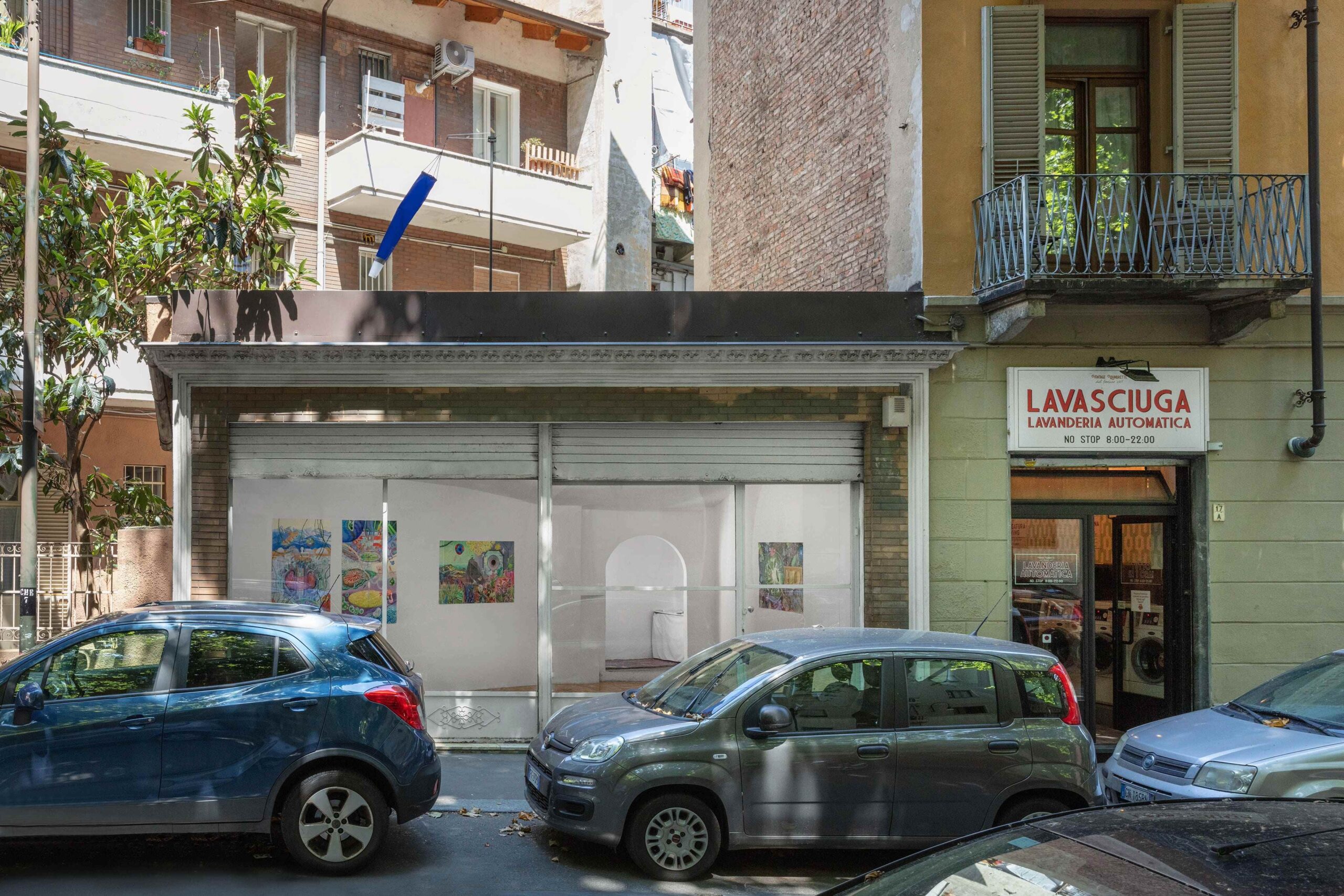
Cripta747, Via Catania 15F, Turin
25.05—29.07.2023
Glittering Landscape
Taisia Korotkova, Margherita Morgantin, Lemmo
Curated by Alessandra Franetovich
On July 12, 2022, NASA, ESA, CSA, and STScI released an image called the Cosmic Cliffs, depicting a portion of the universe known as NGC 3324, a star-forming region located in the Carina Nebula. This region is situated approximately 7,600 light-years away from Earth. The image was created using infrared technology by the James Webb Space Telescope. It captures the ethereal beauty of the gas and dust shaping the birth processes of stars, recalling the mountains and valleys found on Earth. These shimmering landscapes, also referred to as glittering landscapes, evoke the genre of landscape painting, but aesthetically remind one of certain screensavers. Each type of matter corresponds to a specific colour, making these images objects of scientific study as well as valuable tools for disseminating knowledge about the universe beyond the scope of scientific research. One example of this research, created as part of NASA's Sonification Project, uses sonorization to render the images audible. These acousmatic images serve to communicate aspects of the universe to visually impaired individuals, enhancing the imaginative experience for everyone. Sounds, like images, can also overcome linguistic, cultural, and national borders.
Drawing from the mythology of the Sun god, the relationship with cosmic space unveils a visionary dimension in which the fantastic and scientific coexist in a kind of osmosis — a condition which even the latest technologies cannot escape.As cosmic space becomes a focal point in the new era of space exploration, one that is characterized by the participation of private investors,it is worth contemplating the emerging risk of the privatization of our collective imagination of the cosmos. Currently, efforts are being made to anthropize the ‘eighth continent’, by researching methods to safely dispose of non-functional satellites and prevent them from becoming space junk. However, there is also a concerning trend of trivializing the cosmic experience for materialistic purposes. At the height of the Cold War, in 1972, space served as an arena for peaceful cooperation between U.S. astronauts and Soviet cosmonauts thanks to a treaty signed by their respective political leaders. This collaboration between competitors in the space race exemplified the cooperative nature of cosmic space. Even today, cosmic space symbolizes cooperation among individuals from diverse backgrounds and cultures, but it faces unprecedented privatization when it becomes a platform for personal, economic, and partisan interests — recent examples include the emergence of mass tourism for the wealthy and the use of historical events as propaganda messages, such as the display of the Victory Banner by Russian cosmonauts during a spacewalk in April 2022. The latter, deemed to be a somewhat provocative gesture, since it was made during their stay on the International Space Station (ISS), launched in 1998 as a result of structured multilateral cooperation processes, reflects the potential threats to the spirit of cooperation in cosmic exploration.
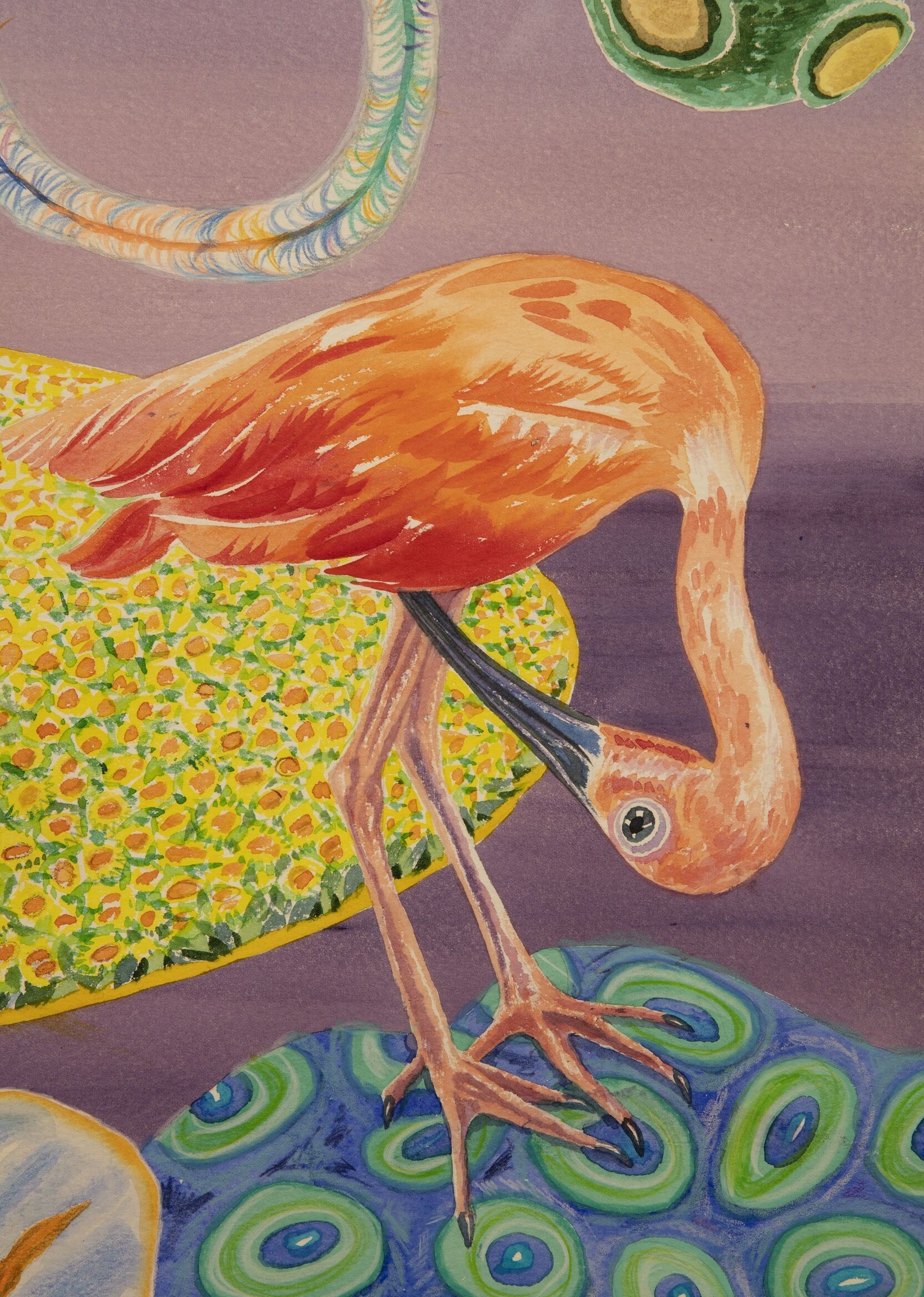
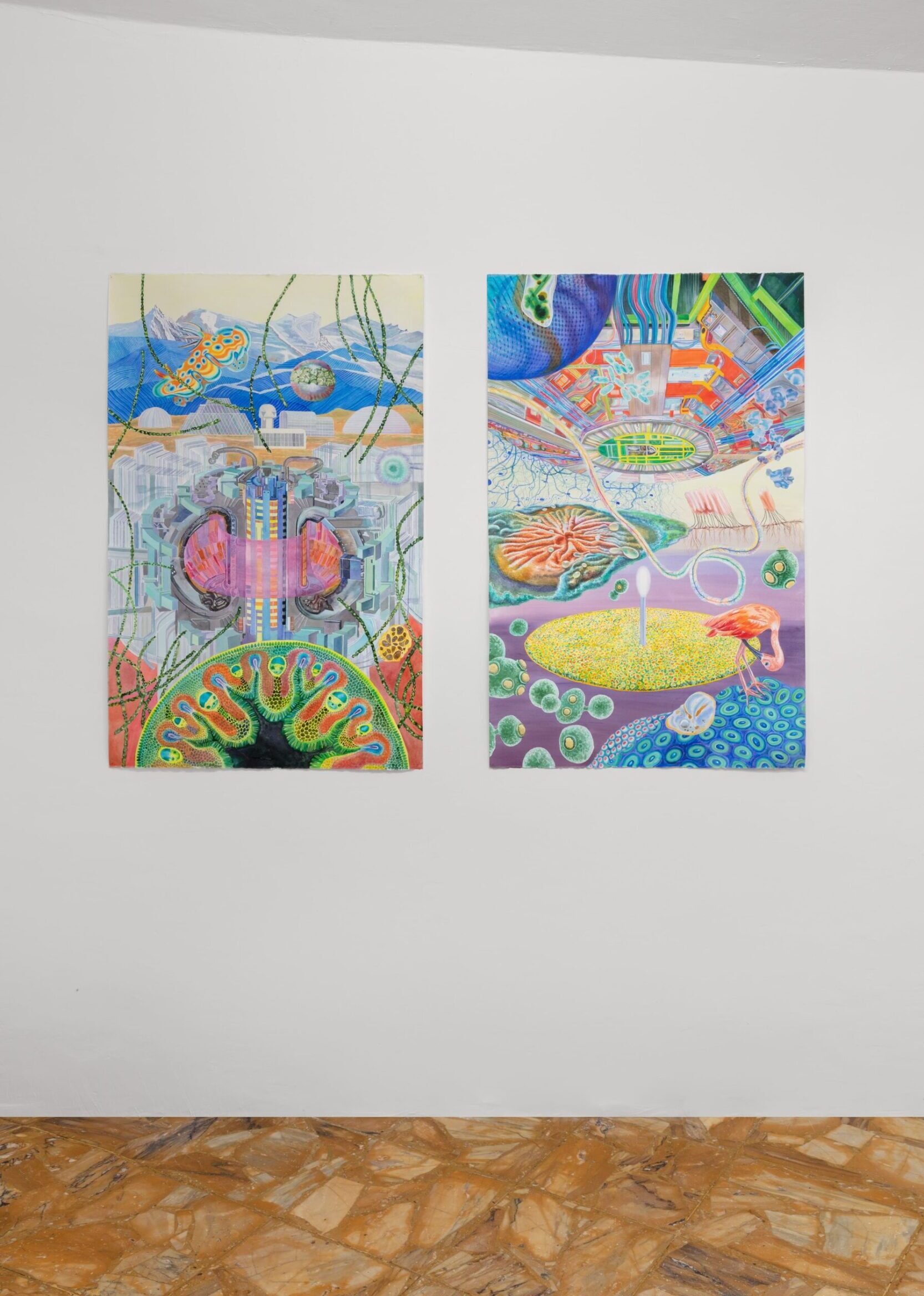
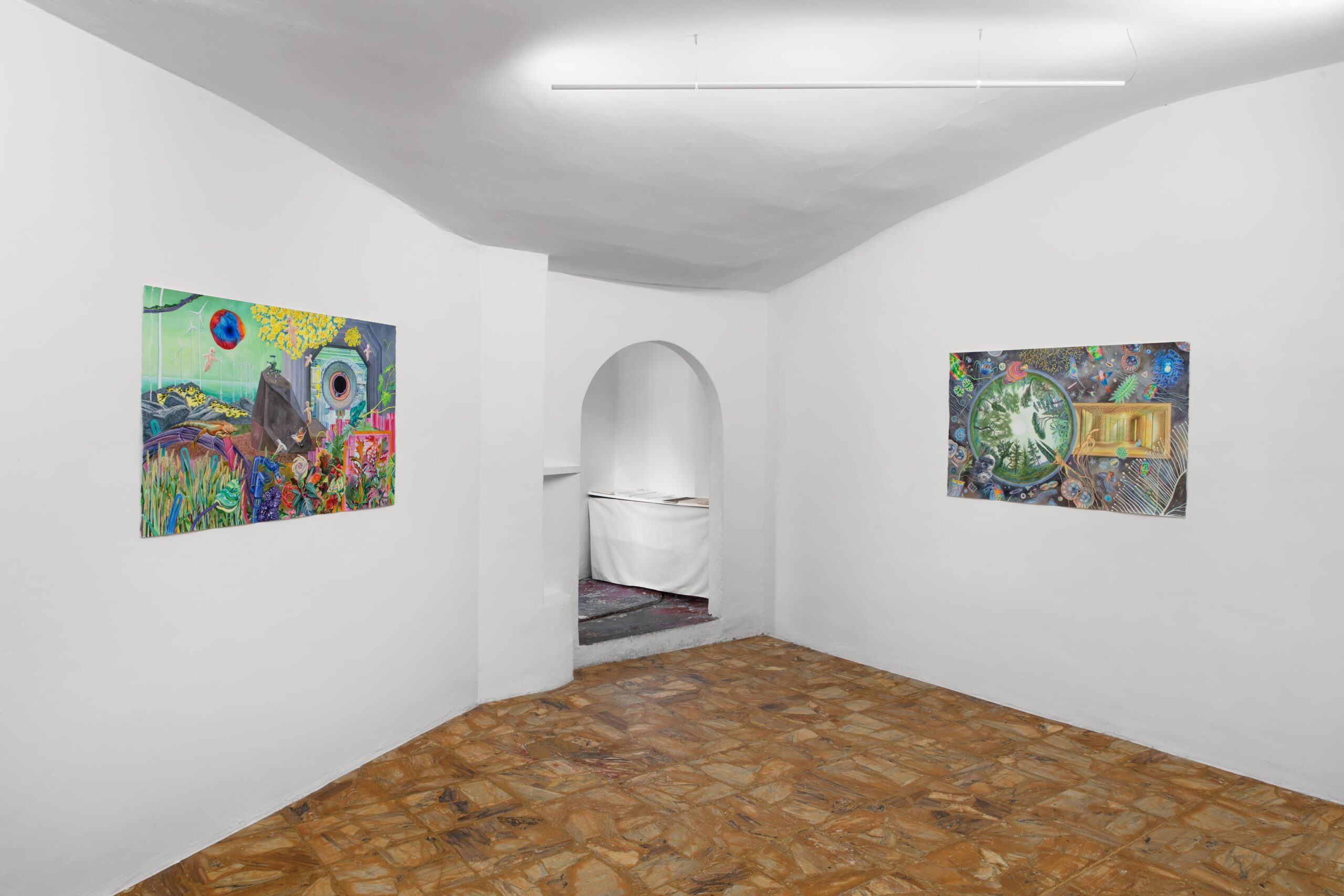
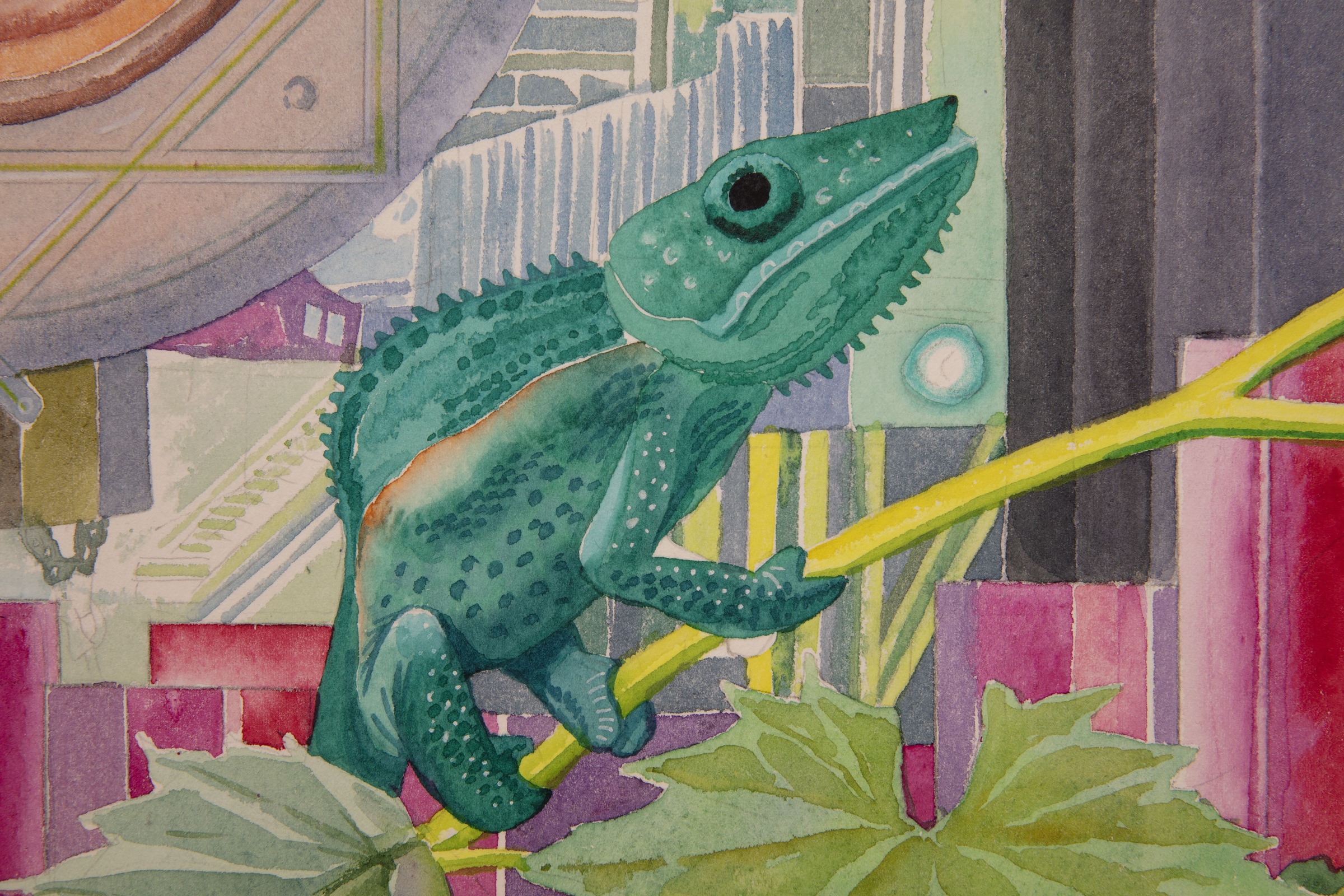
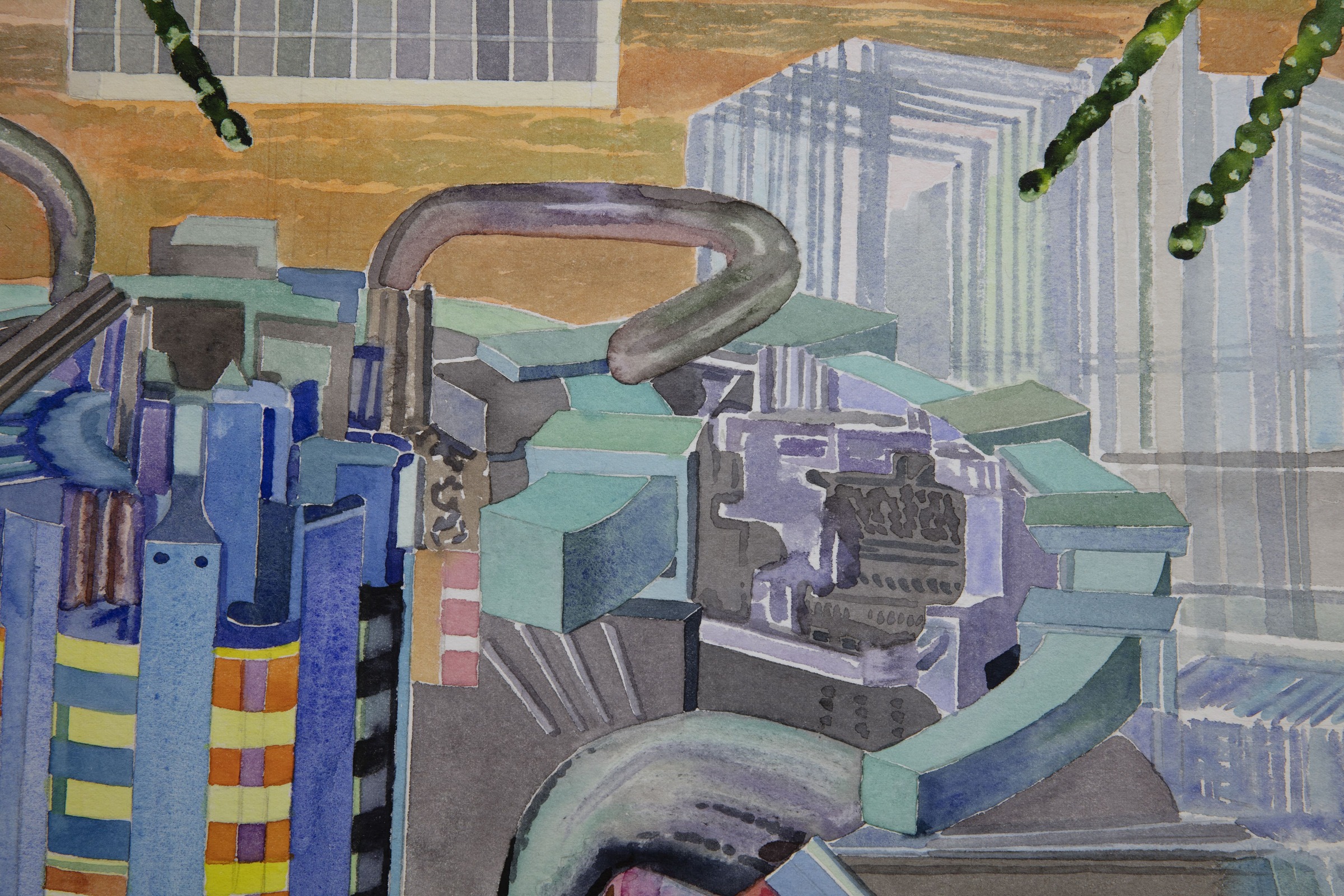
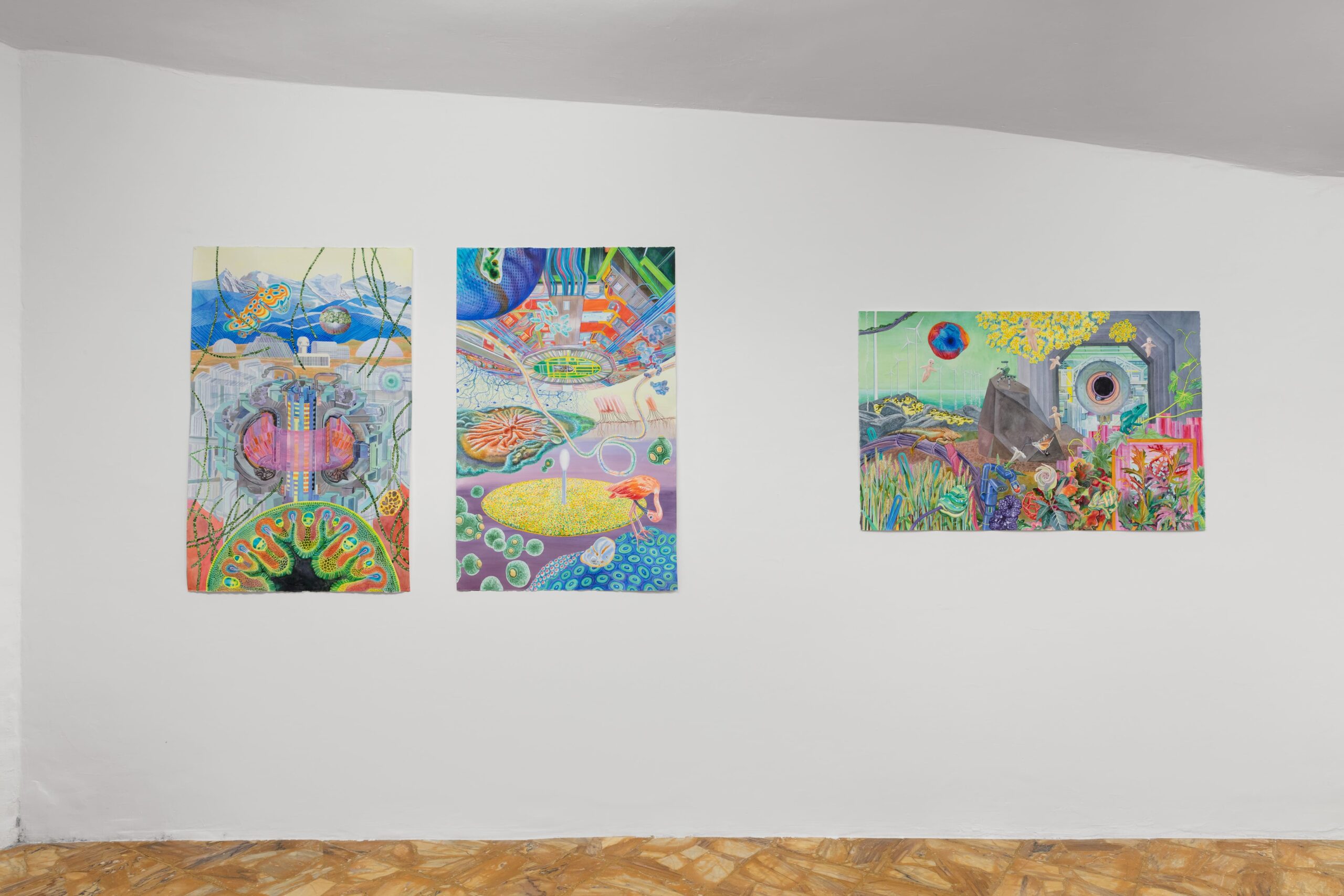
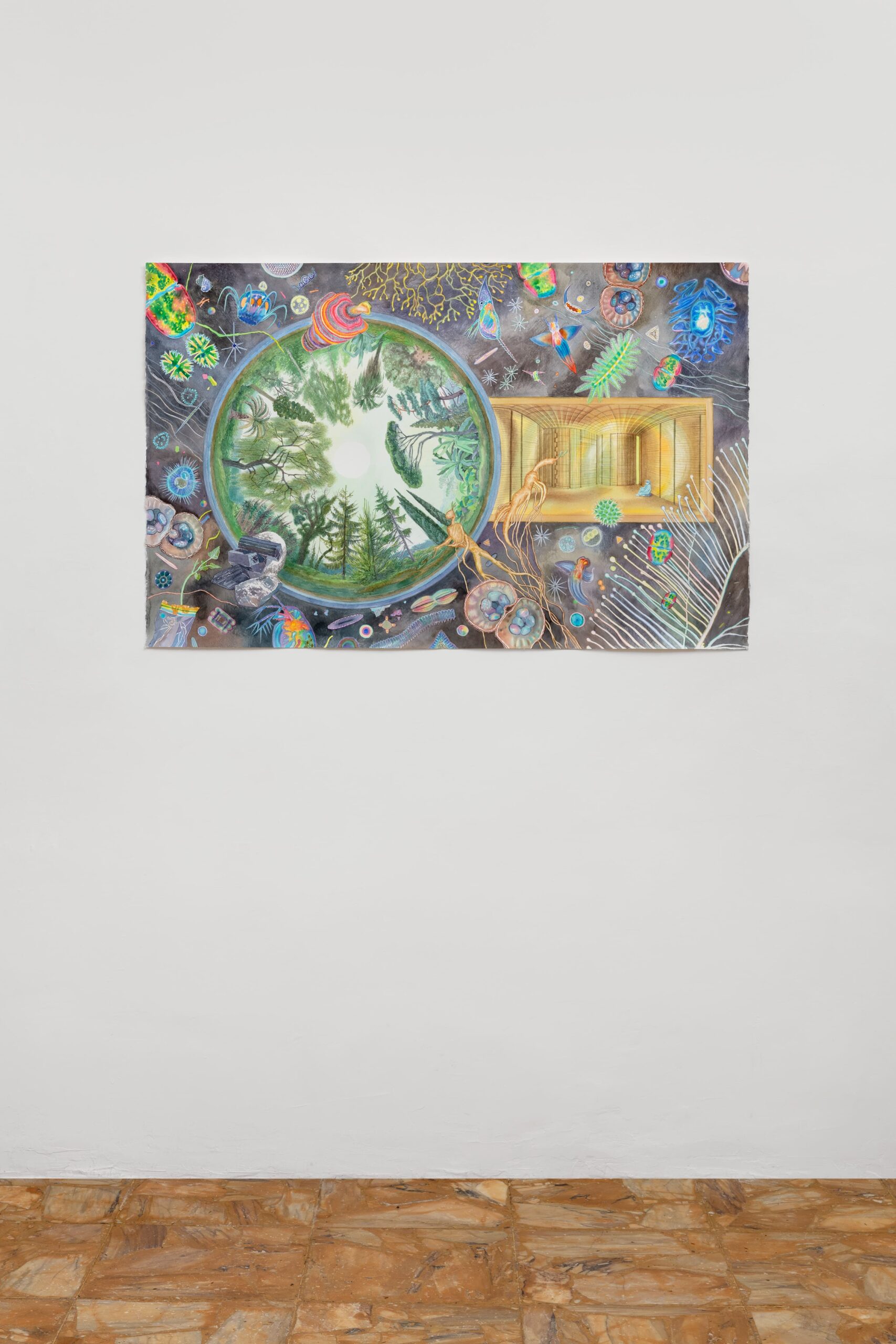
The new works presented by Taisia Korotkova and Margherita Morgantin in the exhibition establish various connections to research centres, scientific institutions, laws, discoveries, and the history and museology of science. Taisia Korotkova's series of watercolours titled Imagined destinations provides a glimpse into imaginary landscapes constituted by the coexistence of existing and fantastic elements. Different biomorphic plants — the Cern Large Hadron Collider (LHC) particle accelerator, the Tokamak nuclear reactor, and the Biosphere 2 project — are collected in an irregular atlas composed of remnants and ruins of past discoveries that are inextricably intertwined with current instruments, giving substance to expectations toward an egalitarian and peaceful future.
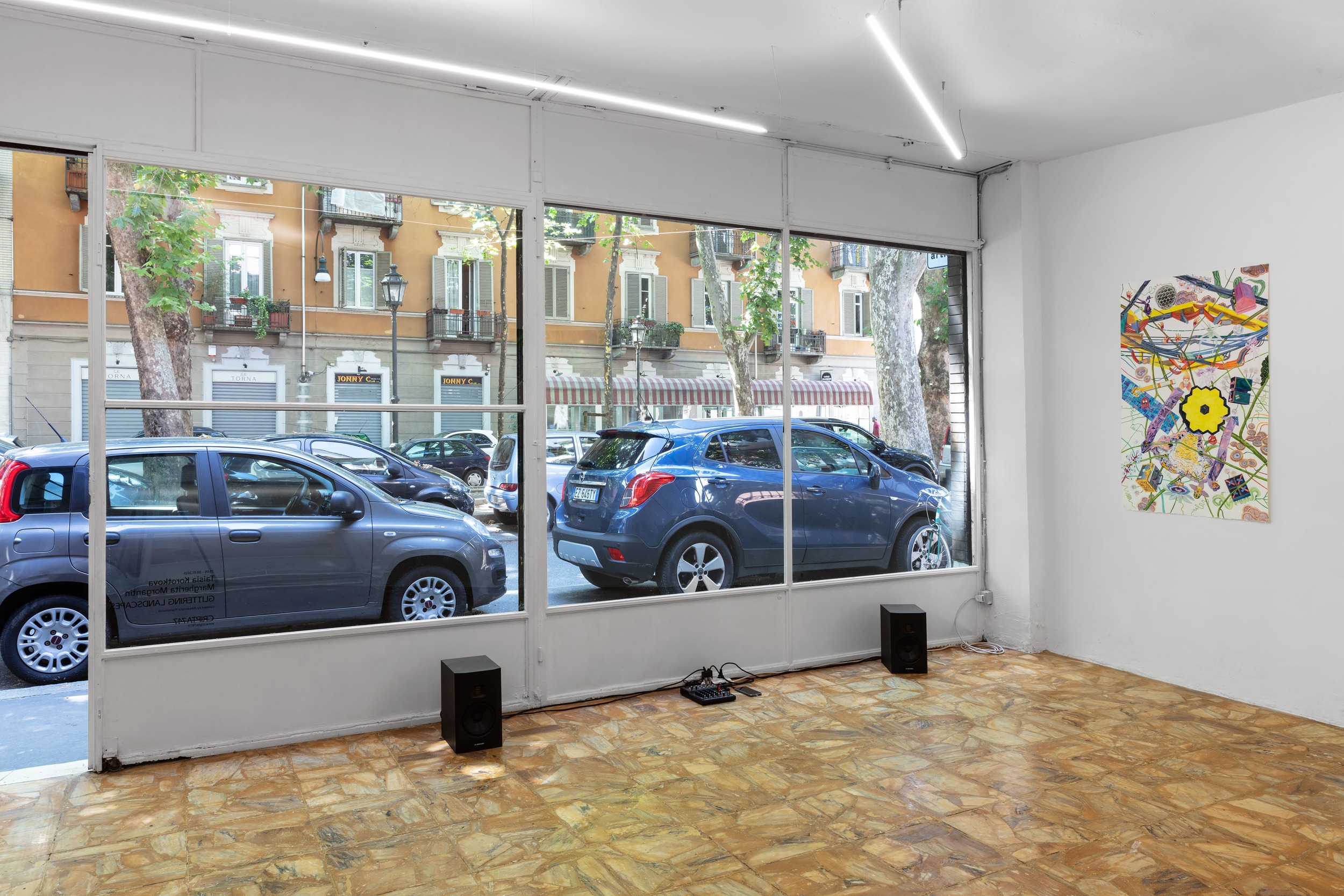
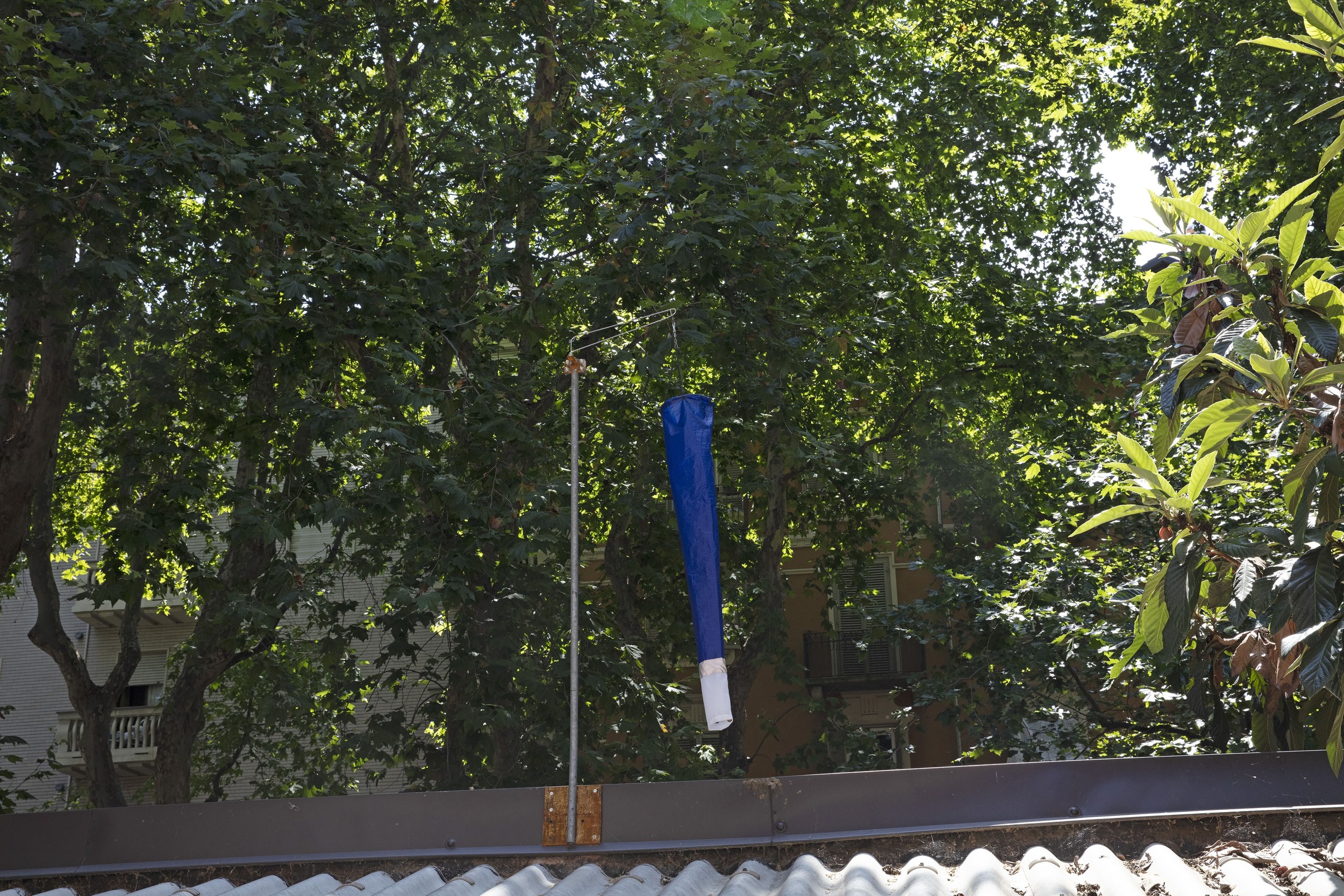
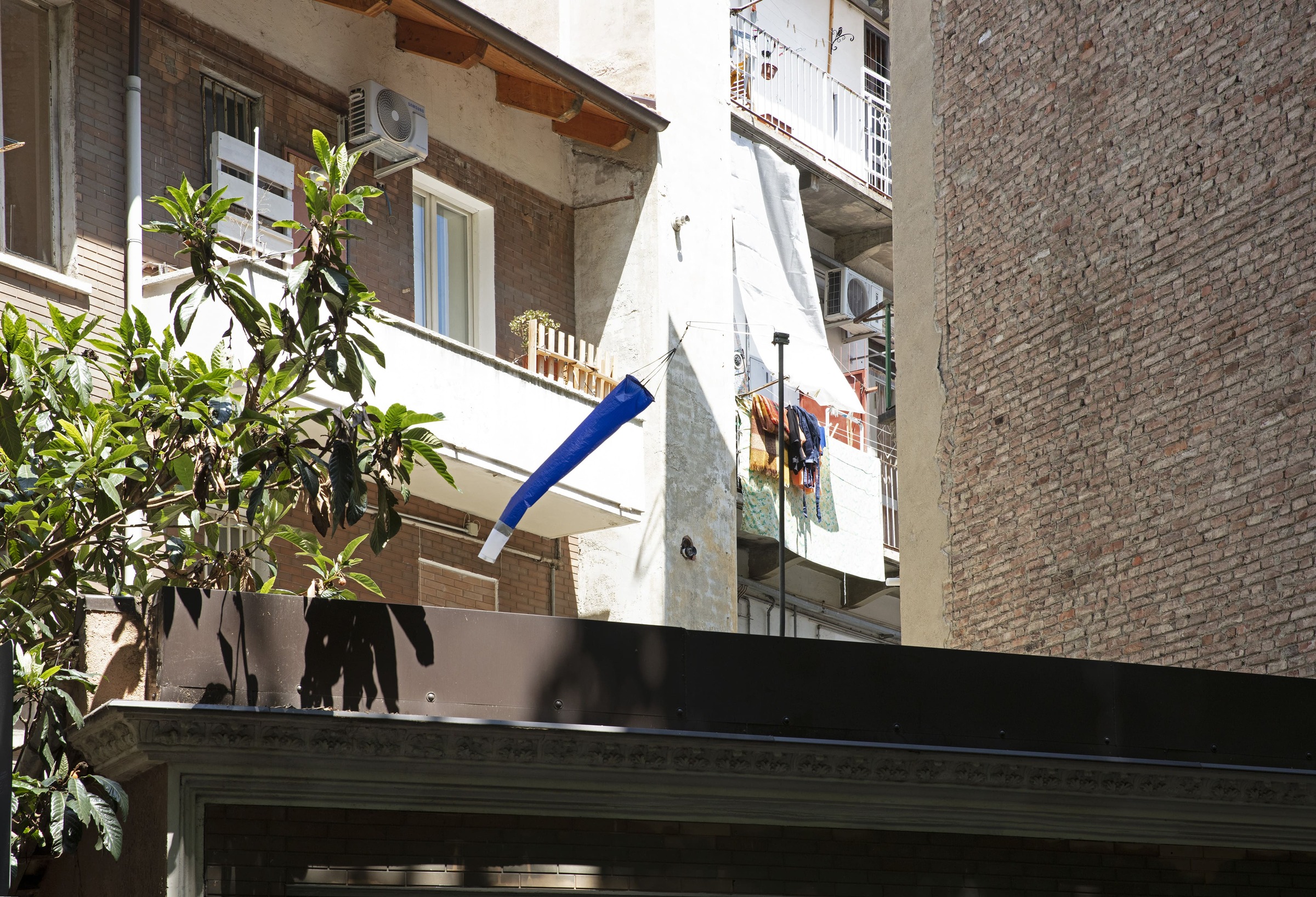
With Imagined destinations Korotkova departs from her previous productions, typified by a critical and analytical iconography profoundly influenced by the post-Cold War era — works dealing with mistakes, wounds, remnants, post-humanism, the ecological aftermath of scientific research, and the accompanying visual culture of radioactive waste and abandoned buildings. While keeping these topics in mind, the artist reinterprets them with the aim of constructing a non-existent yet desirable future centred around interspecies coexistence. The medium of painting, characterized by the detailed figuration of the portrayed elements and garish colours, introduces the topic of the fantastic. Similarly, Morgantin's site-specific work lies in the encounter between the real and the unreal. Variabili 1 (venti cosmici) consists of an altered anemoscope, also known as a windsock, placed on the roof of Cripta747. The instrument has been defunctionalized from its original purpose and is now contextualized as a transfigured element, representing a dialogue between the scientific and artistic disciplines. Instead of proposing a faithful recording of data, the purpose of the windsock is to give form to the invisibility of the wind. While taking on a sculptural and installative value, the lightweight material of the object has been contaminated by the insertion of rattles. Depending on the weather conditions, the windsock generates sounds that blend into Margherita Morgantin and Lemmo's Cosmic silence 6 , an interconnected audio track and integral part of the site-specific intervention. Initially presented live during the opening, it will continue to exist as a phantasmagorical presence within the exhibition. These sounds emerge from the interweaving of local sources with translations into sound spectra derived from statistical mathematical data of the VIP = Violation of the Pauli exclusion principleVIP experiment, which investigates the Violation of the Pauli exclusion principle at the Gran Sasso Laboratory. Morgantin created an elaborate artwork of the same name between 2020 and , produced by Xing for the eighth edition of the Italian Council. VIP is a research project based on a reinterpretation of the Exclusion Principle formulated in 1925 by physicist Wolfgang Ernst Pauli (1900-1958). VIP aims to observe the possibility of behaviours that defy this law, which guarantees the stability of matter in the universe. Morgantin's approach aligns with this dynamic by infusing it with the ambiguity characteristic of the artistic medium. Though distinct, the works by Korotkova and Morgantin insinuate doubts by proposing alternatives and offering liminal perspectives that highlight the potential for escaping from a confined interpretation of the knowable. They explore the gaps and interstices that emerge from contemporary theories and practices surrounding our methods of knowing, collecting data, and disseminating knowledge. Ultimately, these works prompt reflection on the dynamics of belonging and co-participation in a future that unites us across time and space, transcending geographical boundaries and encompassing cosmic space.
BIO AND CREDITS
Taisia Korotkova lives and works in Milan. She was born in Moscow in 1980. In 2003 she graduated from the Institute of Contemporary Art (Moscow). In 2004 she graduated from V. I. Surikov Moscow State Academic Art Institute. In 2010 she won the Kandinsky Prize in the category “Young Artist of the Year. Project of the Year”. Taisia Korotkova’s works are in the collections of State Tretyakov Gallery, Moscow Museum of Modern Art, Institute of Russian Realistic Art, Uppsala Art Museum, collection of the President of the Austrian Republic, the Moscow City Hall, as well as in private collections in Russia and abroad. Her works have been displayed in several shows, among which Cosmopolita, Cittadella degli Archivi di Milano, (2023); Novacene, Utopia Lille 3000, Lille, France (2022); Dark Forest, State Tretyakov Gallery, Mosca (2021); New Habitat, Kottinspektionen, Uppsala (2018); 4th Ural Industrial Biennial of Contemporary Art, Ekaterinburg (2017); 4th Moscow Biennale of Contemporary Art, main project, Mosca (2011).
Margherita Morgantin lives and works in Milan, and was born in Venice. She graduated in Architecture at the IUAV Department of Technical Physics researching systems for forecasting natural light. Her work is articulated through different languages, ranging from drawing and installation to performance, and moving on a thread that connects language, philosophy, mathematics and visual culture. She has contributed to group shows and festivals in Italy and abroad, and she published the books of short texts and drawings: Titolo variabile (Quodlibet 2009), Agenti autonomi e sistemi multiagente (con M.Di Stefano) (Quodlibet 2012), Wittgenstein. Disegni sulla certezza (nottetempo 2016), Lo spazio dentro (con M.Buri) (nottetempo e-pub 2020), Sotto la montagna Sopra la montagna Since 2013, she also works as Pawel und Pavel, a collaborative project on writing and performance with Italo Zuffi. She teaches at the Brera Academy of Fine Arts in Milano.
Lemmo live and work in Turin. They are sound composers and sound researchers in the field of electronic and experimental music. They compose music for theatre, performances, installations and audiovisual arts. Working with algorithmic and electronic composition, their research explores the possibilities of algorithmic composition and the relation with the acoustic viability in the space, both in the field of sound research and in the multidisciplinary one. They work and worked among others for Chiara Bersani, Teatro Valdoca, XING-Margherita Morgantin, saudadesaudade.
Alessandra Franetovich has a PhD in contemporary art history, and is a critic and curator. She is currently a post-doc researcher at the Quadriennale di Roma, member of the curatorial board of Cripta747, and is co-lecturer at Naba, Milan. Her research has been presented in universities and institutions in Italy and Europe, and she has been awarded scholarships from the Garage Museum of Contemporary Art, Moscow, Italian Ministry of Foreign Affairs and the Ministry of Cultural Heritage for the curatorial residency Premio Mosca, and V-A-C foundation, Moscow. She has curated exhibitions, and artistic residencies and collaborated with galleries, non-profit spaces, festivals and museums. Her texts have been published in catalogs and magazines for e-flux journal, Middle Plane, Castello di Rivoli, Centro Pecci, Cosmic Bulletin.
The project is supported by Regione Piemonte and Fondazione CRT.